Moon Discovery 2026: Key Facts
The Moon is Earth's sole natural satellite, influencing oceanic tides and climate stability. Learn about its discovery and significance in this article.
Introduction & Overview
The Moon is one of the brightest celestial objects in the sky and has been a significant part of human history. It influences Earth in various ways, such as the occurrence of oceanic tides, climate stability, and the length of a day.
Historical Timeline
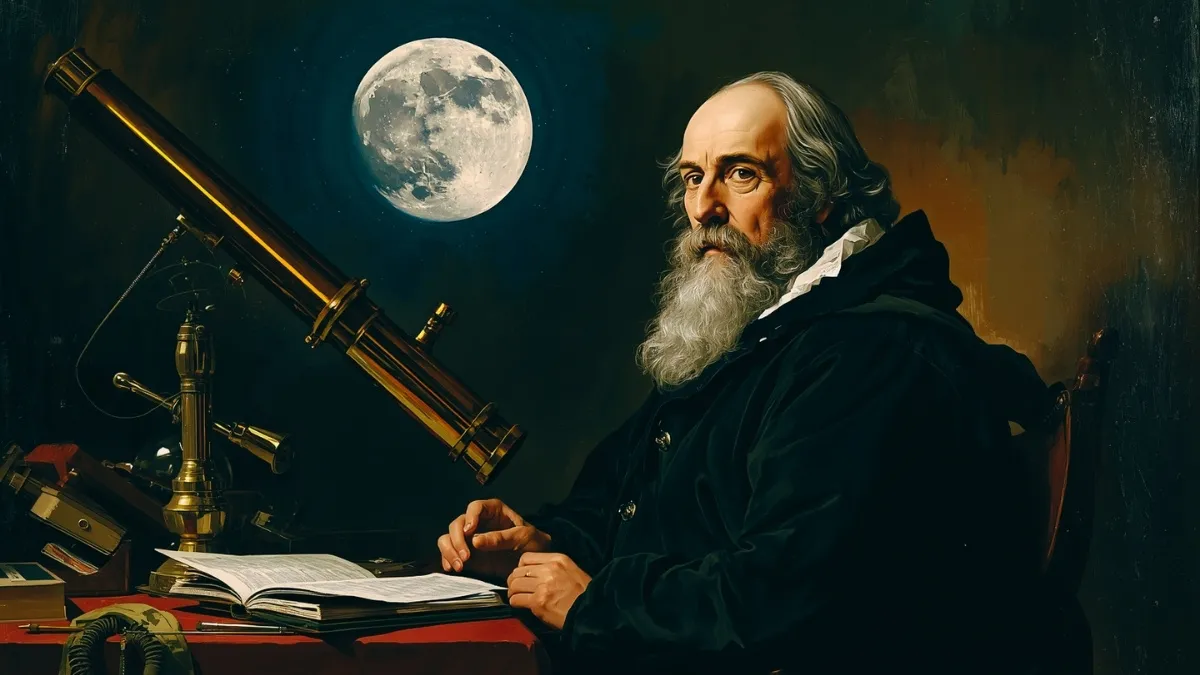
The Moon has been known to mankind since the earliest times because it could be observed directly with the naked eye. However, the discovery of various physical properties on the lunar surface was made from 1609 to 1610 by Galileo Galilei. In 1609, Galileo designed telescopes and used them for studying the Moon. In 1610, Galileo released Sidereus Nuncius, which detailed his findings from his observation of the Moon and other outer space elements through a telescope.
Key Facts & Figures
- The Moon is approximately 384,400 km far from Earth.
- The Moon's surface has mountains, valleys, and craters.
- The Moon was formed about 4.5 billion years ago, following the creation of the Earth itself.
- The most widely accepted hypothesis regarding the Moon's origin is called the Giant Impact Hypothesis.
Memory Tricks
To remember the key facts about the Moon, you can use the following mnemonic: MOON
- Mountains, Orbiting, Origin, Natural Satellite.
Frequently Asked in Exams
The Moon is an important topic in various exams, including SSC, UPSC, and RRB. Some common questions asked about the Moon include:
- Who discovered the Moon?
- What is the distance between the Earth and the Moon?
- What is the Giant Impact Hypothesis?
Frequently Asked Questions
Q: Who discovered the Moon?
A: The Moon was discovered by Galileo Galilei in 1609 and 1610. He made the first scientific telescopic discovery about the Moon's surface.
Q: What is the distance between the Earth and the Moon?
A: The Moon is approximately 384,400 km far from Earth. This distance is important for understanding the Moon's influence on Earth's tides and climate stability.
Q: What is the Giant Impact Hypothesis?
A: The Giant Impact Hypothesis is the most widely accepted hypothesis regarding the Moon's origin. It states that an object about the size of Mars smashed into the Earth sometime in its early life, causing massive debris of rocks and soil to be released from the surface of the planet into space, where it finally accumulated and formed the Moon.
Tags
Comments / टिप्पणियां (0)
Please sign in with Google to post a comment.